Country checked: China. Xiaomi’s official China product and store pages were checked on 11 October 2026. No official US product page was available, so China pricing, software and network details are not presented as US-market guarantees.
Editorial standard: This independent official-spec analysis uses Xiaomi’s own product and store pages for confirmed facts. NextAIGen has not performed a hands-on laboratory test and is not affiliated with Xiaomi. Availability, software, bands, prices and accessories can change by country.
Xiaomi 18 Pro buying guide in two minutes
Its strongest argument is balance. The 6.4-inch class body is easier to hold than the Max, while the two 200MP camera headline, 7,000mAh battery and rear display keep the hardware ambitious.
The starting China price is CNY 5,999. Western buyers should not treat that as a global price or import recommendation. Confirm the exact model, carrier compatibility, Google services, tax, warranty and repair route before ordering.
Short verdict: Choose the Pro when hand comfort, pocketability and lower entry price matter more than the Max model’s larger screen and bigger battery. Buy through an official regional channel when possible.
Verified Xiaomi 18 Pro specifications at a glance
| Official product | Xiaomi 18 Pro |
|---|---|
| Processor | sixth-generation Snapdragon 8 Ultimate Edition platform |
| Camera system | a Leica professional triple-camera system with two 200MP cameras and a 50MP camera |
| Battery | 7,000mAh |
| Displays | 6.4-inch main display and 2.7-inch rear display |
| Memory and storage | 12GB + 256GB, 12GB + 512GB, 16GB + 512GB, and a 16GB + 1TB special edition on Xiaomi’s China store |
| China starting price | CNY 5,999 |
| Official colours | Black, White, Starry Blue and Ice Peach Pink |
| Global availability | Confirm on Xiaomi’s local country website; the cited store details are for China |
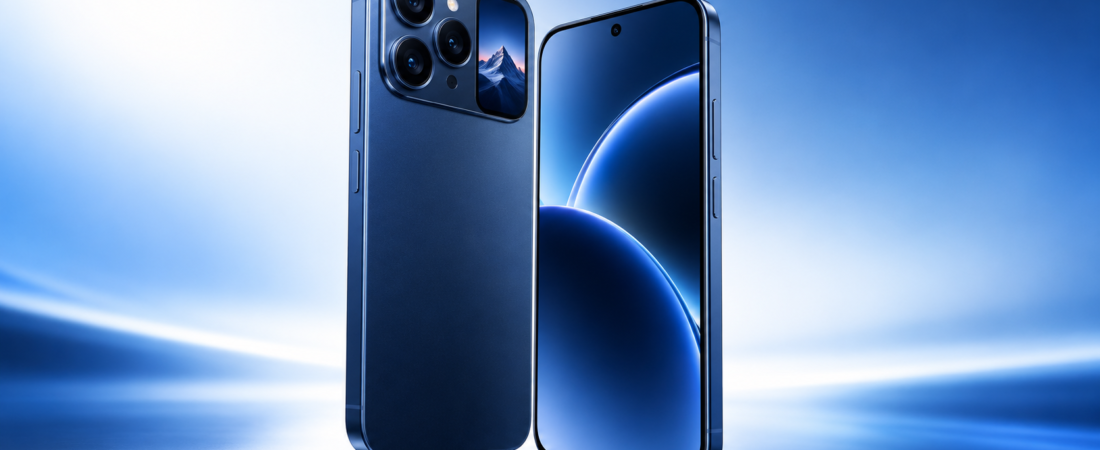
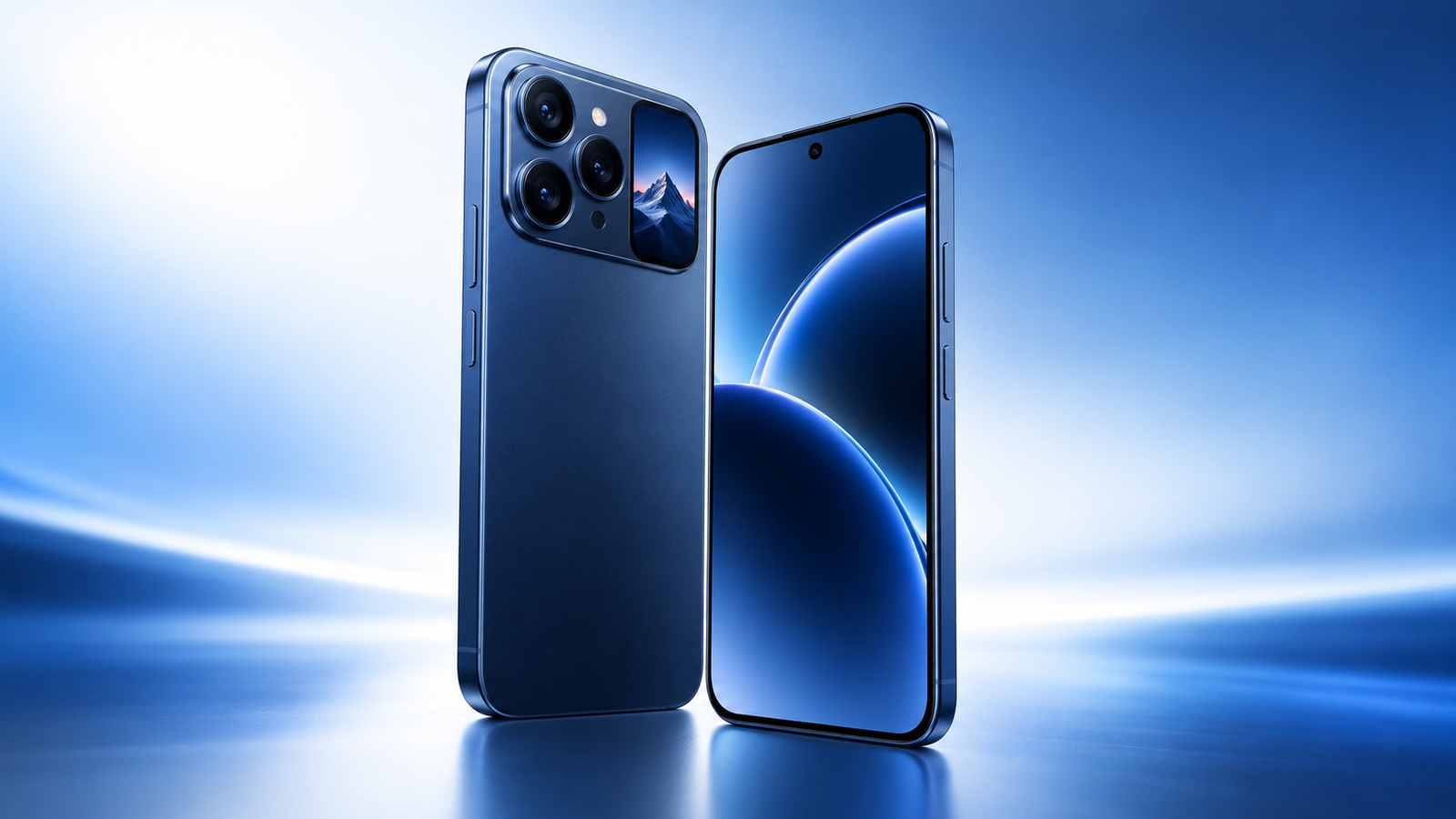
| Editorial image | AI-generated blue concept image, not an official Xiaomi product photograph |
Only information visible on Xiaomi’s official pages is presented as confirmed. Missing regional details are purchase checks, not facts to invent.
What Xiaomi officially confirms
Xiaomi 18 Pro is now a real Xiaomi product, not a rumour. Xiaomi’s own China store identifies the phone, the sixth-generation Snapdragon 8 Ultimate Edition platform, a Leica professional triple-camera system with two 200MP cameras and a 50MP camera, 7,000mAh battery, 6.4-inch main display and 2.7-inch rear display, and a starting price of CNY 5,999. That official confirmation matters because search results can mix the phone with older leaks, reseller pages or another Xiaomi 18 model.
This guide treats Xiaomi’s first-party pages as the source for confirmed specifications. Where Xiaomi’s accessible regional page does not clearly provide a value, we do not guess it. Charging speed, exact dimensions, weight, water resistance, network bands, eSIM support and software availability must be checked for the exact model and country before purchase. A China-store specification is not automatically a promise of a global release.
Design, blue colour and everyday comfort
Xiaomi lists black, white, Starry Blue and Ice Peach Pink among the official colour choices. The blue editorial image in this article is an AI-generated concept, not an official product photograph. It is designed to show the blue direction the reader asked for without pretending to document the retail phone. Buyers should use Xiaomi’s store photography and an in-person display to judge the actual finish.
Its strongest argument is balance. The 6.4-inch class body is easier to hold than the Max, while the two 200MP camera headline, 7,000mAh battery and rear display keep the hardware ambitious. Comfort should be tested with a case fitted. Try typing one-handed, reaching the top corners, holding the camera for several minutes and carrying the phone in the pocket or bag used every day. A premium finish is valuable only if the phone remains secure and comfortable after the first week.
Main display and rear display
Xiaomi 18 Pro combines a 6.4-inch main display and 2.7-inch rear display. The main panel is the screen that determines reading comfort, gaming space, keyboard size and outdoor visibility. The rear panel changes quick interactions: it can potentially support previews, status information or camera framing, but usefulness depends on Xiaomi’s software and the apps enabled in the shipping version.
Do not buy the phone only because the rear display looks unusual. In a store or during the return period, test whether it saves real steps for selfies, notifications, timers, music or travel. Also check minimum brightness at night, reflections outdoors, text scaling, touch accuracy, colour consistency and whether sustained heat reduces brightness. A high refresh rate feels smooth, but readability and thermal stability matter more over several years.
Processor and sustained performance
The official product page lists the sixth-generation Snapdragon 8 Ultimate Edition platform. A flagship processor should handle demanding games, high-resolution camera processing, multitasking and on-device AI features, but a processor name cannot describe sustained performance on its own. Cooling, memory configuration, software scheduling and ambient temperature decide whether speed remains consistent after twenty or thirty minutes.
Test the phone with the work you actually do. Export a long video, play a demanding game, capture a series of high-resolution photos and switch repeatedly among maps, messaging and camera. Watch for frame drops, aggressive app reloads, heat near the camera island and sudden battery loss. A benchmark peak is useful context, but dependable speed during a full task is the practical result.
Leica triple cameras and the megapixel question
Xiaomi describes a Leica professional triple-camera system with two 200MP cameras and a 50MP camera. That is exceptional resolution on paper, yet megapixels are only one part of camera quality. Sensor size, lens aperture, optical stabilisation, focus speed, shutter timing, colour processing and motion handling decide whether a photo is useful. Leica branding may influence colour profiles and the camera experience, but the buyer should still inspect original files.
A fair camera test includes faces, pets, children, printed text, foliage, indoor movement, backlight, night streets and video while walking. Compare skin tones and shutter speed before zooming into tiny details. Full-resolution 200MP modes can create large files and work best in good light. Default binned modes may be faster and cleaner in ordinary scenes. Keep original files when using AI editing and label materially altered images honestly.
Zoom, portraits and video
A high-resolution camera system can create useful crops, but digital reach is not the same as a dedicated optical focal length. Xiaomi’s official regional specification page should be checked for the precise telephoto design, optical range, apertures, stabilisation and video limits of the exact model. Avoid reseller tables that silently combine specifications from another variant.
For portraits, test hair edges, glasses, hands and mixed skin tones in both daylight and indoor light. For video, record a walking clip, a slow pan, speech in wind and a transition from sunlight into shade. Look for focus hunting, lens-switch jumps, rolling shutter and audio quality. Creators should transfer the footage into their real editor before the return window closes, because capture quality and workflow compatibility are separate questions.
Battery capacity and realistic endurance
The official battery capacity is 7,000mAh. Capacity is a major strength, but it does not guarantee a particular number of hours. Display brightness, cellular signal, camera recording, gaming, background services, thermal conditions and the regional software build can change the result. An imported phone searching for poorly supported network bands may use more power than a domestic review suggests.
Measure endurance over several normal days. Record starting charge, navigation time, camera use, mobile data, calls and remaining charge. Run one Wi-Fi-heavy day and one cellular-heavy day. Heat accelerates battery ageing, so use Xiaomi-approved charging equipment, enable battery-care features when available and avoid charging in direct sun or under insulating bedding. A future battery replacement may extend useful life far more cheaply than a new flagship.
Charging and accessory safety
Charging speed should be confirmed on Xiaomi’s exact regional page and for the adapter included with the selected package. A seller may advertise the maximum supported rate while shipping a different plug, cable or no suitable adapter. Imported power accessories can also create warranty, certification and travel problems.
Peak wattage is not a constant rate. Charging slows as the battery fills or temperature rises. A reputable compatible adapter, undamaged cable and ventilated surface matter more than chasing a laboratory maximum. Before travel, check voltage support and use a certified plug adapter rather than a loose converter. Buyers who charge overnight may prefer a cooler scheduled mode, while travellers may value a quick top-up more often.
Memory, storage and file planning
Xiaomi 18 Pro is offered in 12GB + 256GB, 12GB + 512GB, 16GB + 512GB, and a 16GB + 1TB special edition on Xiaomi’s China store. Choose storage by measuring current use, expected camera growth and the years you plan to keep the phone. High-resolution photos, offline video, games and editing caches expand quickly. Cloud storage helps with backup but adds recurring cost and still depends on connectivity.
Leave free space for updates, camera processing and temporary files. A practical rule is to keep at least fifteen percent free. Creators should estimate the size of a complete project, including original clips, edits and a second backup. More RAM can help multitasking, but software behaviour determines whether applications remain active. The most expensive configuration is worthwhile only when the workload regularly uses it.
HyperOS, Google services and regional software
Google Play answer: the China-market Xiaomi 18 Pro does not have a confirmed factory Google Play promise on Xiaomi’s official China product or store pages. Do not assume that “Android” or “HyperOS” automatically means the Play Store, Google Wallet, Android Auto and every Google service are licensed and ready. China-market and global Xiaomi builds can differ in languages, preinstalled apps, notification behaviour, Google services, AI features and update timing.
An official global or EEA version may include licensed Google Mobile Services, but that must be confirmed for its exact model number and regional ROM. Before keeping the phone, open Google Play Store, tap the profile icon, then Settings > About and verify that it says Play Protect certification: Device is certified. Google explains that only Play Protect-certified devices are eligible to include licensed Google apps such as the Play Store.
Do not treat a reseller-installed Play Store or flashed “global ROM” as equivalent to an official global phone. An unlocked bootloader or modified build can affect Play Protect certification, Google Wallet, banking apps, streaming DRM, over-the-air updates, Android Auto and warranty. The safe rule is simple: China retail unit means Google Play is not guaranteed; an official regional unit is acceptable only when Xiaomi’s local page and the device’s Play Protect status confirm support. Also test push notifications, Widevine level, work profile, preferred language and every banking or employer app during the return period.
Network support in the United States, Canada, UK and Europe
United States answer: do not buy the China-market Xiaomi 18 Pro expecting guaranteed full carrier support. Xiaomi’s official China product and store pages do not publish a US model, US carrier certification or a US-specific band table. The Xiaomi 18 Pro also does not appear in AT&T’s official unlocked-device service-capability list. On Verizon and T-Mobile, the only meaningful pre-purchase check is the exact device IMEI in the carrier’s BYOD checker. A seller saying “global 5G” or showing a 5G icon is not proof that calls, low-band coverage and carrier features will work.
T-Mobile may accept some imported phones when the IMEI passes its checker, but T-Mobile states that it cannot guarantee the call quality, performance, data speed or feature compatibility of devices it did not sell. AT&T or Verizon activation is a poor assumption unless their checker explicitly accepts the exact IMEI. Even when basic calls and mobile data work, VoLTE, Wi-Fi Calling, 5G bands, eSIM, E911, visual voicemail and carrier aggregation may be missing or unreliable.
Practical buying rule: treat the Xiaomi 18 Pro as unsupported in the United States until the seller supplies the exact model number and IMEI and your intended carrier confirms it. Run the IMEI through T-Mobile’s official checker, Verizon’s official BYOD checker, or the carrier’s equivalent before the return window closes. US buyers who need dependable coverage, emergency calling and local support should choose an officially sold US model instead. Canadian, UK and European buyers should apply the same model-and-carrier check rather than relying on the phone name alone.
Warranty, repairs and import costs
An imported Xiaomi 18 Pro may not receive local Xiaomi warranty service. Returning a defective device internationally can take weeks, and local shops may not stock the screen, rear display, battery or camera assembly. Customs, tax, shipping, currency conversion and payment fees can remove the apparent saving.
Calculate the complete delivered price and compare it with a locally warranted Galaxy, Pixel, iPhone or OnePlus. Ask who pays return shipping, how dead-on-arrival cases are handled and whether a refund includes import charges. Check repair pricing before buying insurance. A slightly more expensive local phone can be better value when it provides immediate service, carrier certification and predictable resale.
Privacy, security and account recovery
Set a strong device passcode, enable the supported biometric unlock, automatic security updates, theft protection and remote location. Keep account-recovery methods that do not depend entirely on the phone that may be lost. Save recovery codes securely and test backup restoration with a non-critical file.
Banking and authenticator applications require a migration plan. Keep the old phone until important accounts, messages and two-factor codes work on the new device. Review cloud backup locations, ad personalisation and permissions for regional system apps. Business users should test VPN, certificate, device-management and work-profile requirements before the return period ends.
Accessibility and family use
Text size, screen reading, colour correction, hearing support, captions, switch controls and one-handed options should be tested as purchase requirements. A large screen can improve readability while making physical reach harder. The rear display may help quick camera framing, but it should not replace accessible controls on the main interface.
Families should check parental controls, emergency information, location sharing and age requirements for cloud features. A technically impressive device can still be a poor household choice when local language support, repairs or accessibility applications are uncertain. Test the actual workflow, not just the settings list.
How many years should it last?
A premium phone can remain useful for four to six years when software support, storage, battery service and repairs remain available. Processor speed is rarely the first limitation. Battery wear, accidental damage, full storage and an ended security-update window are more common reasons to replace a device.
Long ownership is less predictable for an unsupported import. Confirm Xiaomi’s update policy for the exact regional model and whether local service will replace the battery later. Use a protective case that does not trap excessive heat, back up important data and keep storage headroom. Resale value can also be weaker where Xiaomi is not officially sold, so plan to keep the phone rather than depending on a future trade-in.
Who should buy it and who should skip it?
Xiaomi 18 Pro is best for buyers who want a more manageable flagship rather than the largest possible display. It suits an enthusiast who understands China-market Android phones, can verify network support and values the rear display, large battery and high-resolution Leica camera system. Choose the Pro when hand comfort, pocketability and lower entry price matter more than the Max model’s larger screen and bigger battery.
Skip it when you need guaranteed carrier activation, simple local warranty, predictable Android Auto or banking compatibility, or fast access to replacement parts. A locally supported flagship with lower headline specifications can create less daily friction. Also skip the upgrade when your current phone has a healthy battery, enough storage and a camera that already meets your needs.
First-week test plan
Keep the packaging and return deadline. Test calls, mobile data, Wi-Fi, Bluetooth, GPS, speakers, microphones, vibration, biometrics and every camera. Use the phone in bright sun and at minimum brightness. Record a long video, play a demanding game and check temperature. Restore apps and verify notifications rather than assuming silence means good battery life.
Import buyers should test VoLTE, Wi-Fi calling, emergency calling rules, Android Auto, Google Wallet, banking, work profile, streaming quality and language support immediately. Creators should complete a full capture, transfer, edit and backup workflow. Document repeatable faults with screenshots or video and contact the seller before the return period closes.
Price and value
Xiaomi lists a China starting price of CNY 5,999. That number cannot be converted directly into a Western retail price. Currency, VAT or sales tax, customs, international shipping, reseller margin, warranty handling and accessories change the total. Global availability and official regional pricing must be confirmed locally.
Compare total ownership cost over four years, not only the first payment. Include a case, charger, cloud storage, likely battery service, insurance and resale. A monthly instalment can hide a high total. Wait a day before buying, then verify the exact model and return terms again. A good purchase should survive that pause.
Final verdict
Xiaomi 18 Pro has a compelling official specification. Its strongest argument is balance. The 6.4-inch class body is easier to hold than the Max, while the two 200MP camera headline, 7,000mAh battery and rear display keep the hardware ambitious. The confirmed Leica triple-camera system, 7,000mAh battery and rear display give it a clear identity rather than a minor annual refresh.
The buying decision still depends on location. Where Xiaomi officially sells and supports the exact model, it can be a serious alternative to other premium Android phones. In an unsupported country, network certification, software, warranty and repairs can matter more than camera resolution or battery capacity. The safest recommendation is to buy through an official regional channel, or import only after verifying every compatibility point in writing.
Frequently asked questions
Is Xiaomi 18 Pro officially announced?
Yes. Xiaomi lists it on official China product and store pages.
What is the battery capacity?
Xiaomi lists 7,000mAh.
How many megapixels are the cameras?
Xiaomi describes a Leica professional triple-camera system with two 200MP cameras and a 50MP camera. Megapixels do not guarantee complete image quality.
Is there a screen on the back?
Yes. Xiaomi lists 6.4-inch main display and 2.7-inch rear display. Check the shipping software for supported rear-screen functions.
Is the blue phone image official?
No. It is an original AI-generated editorial concept and is labelled as such.
Will it work on a US carrier?
Not as a guaranteed, fully supported US phone. Xiaomi’s China pages do not confirm a US model or US carrier certification, and the Xiaomi 18 Pro is not listed in AT&T’s official unlocked-device service-capability document. T-Mobile or Verizon may accept a particular unit only when the exact IMEI passes their official BYOD checker. Even after activation, an imported model may lose low-band coverage, VoLTE, Wi-Fi Calling, eSIM, E911, visual voicemail or full 5G performance. Treat it as unsupported until your carrier accepts the exact IMEI; do not buy it as your only US phone based only on a reseller’s “global 5G” claim.
Does it include Google Play?
The China-market model has no confirmed factory Google Play promise on Xiaomi’s official China pages. An official global or EEA version may include licensed Google Mobile Services, but verify the exact regional model and ROM. On the phone, open Play Store > profile icon > Settings > About and confirm “Play Protect certification: Device is certified.” A reseller-installed Play Store or modified “global ROM” is not the same as an official certified build and can create problems with Wallet, banking apps, Android Auto, streaming DRM and updates.
Should I import it?
Only if you accept the network, software, warranty, customs and repair risks after checking them in writing.
How long should it last?
Four to six years is a reasonable premium-phone target when updates, battery service and repairs remain available.
Which storage tier is best?
Choose from your current use plus expected camera and app growth, leaving at least fifteen percent free.
Official sources checked
- Xiaomi official Xiaomi 18 Pro store page
- Xiaomi official Xiaomi 18 Pro specifications page
- AT&T official unlocked-device service-capability list
- T-Mobile official IMEI compatibility checker
- Verizon official BYOD checker
- Google official Play Protect certification guidance
Editorial disclosure: NextAIGen is independent. The image is AI-generated, no hands-on test is claimed, and purchase-critical details should be rechecked on Xiaomi’s regional website.